Freeride Skis
Designed to float.
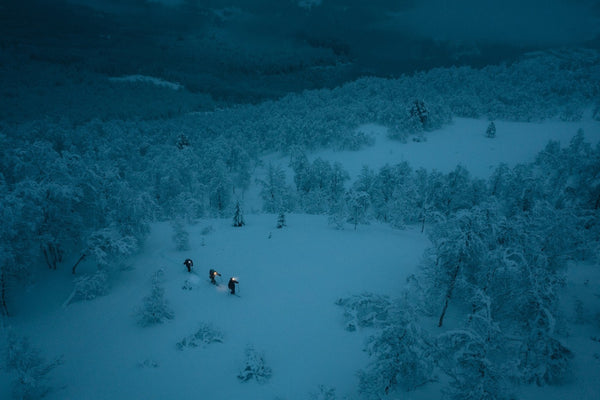
You carve into the fresh snow, the tip lifts, the sound fades, and the entire slope falls silent. We design these skis to be wide and lightweight at the front so that the tip lifts and stays up when the snow gets deep and the slope gets steep. Tested on north-facing slopes, for the most intense snow the mountains have to offer.
2 articles
Filters
Filters applied: 0
€0–€799
166
174
181
182
188
Freeride
Station
Player
Price
Size
Program
Sensation


It's taking shape.
The next freeride ski is on the workbench.
This week, three freeride boards are on the workbench—95, 105, and 110 in width—each offering a different solution for holding a steep, deep line at full speed. We’re testing all three on north-facing slopes until one stands out. The one that holds up stays.
Made to keep you on top.
A freeride ski has one mission: to keep you afloat when the snow is deep and the slope drops away. We build the tip wide and flexible so it climbs over the powder instead of sinking beneath it, and we keep the tail solid so it holds its ground when the snow gets heavy and rutted further down. At the Lab, we test every shape on the steepest slopes within our reach—where a turn that’s even a little too soft is punished immediately. What you’ll find here has floated, held its ground, and delivered the one thing you came for: the thrill of a clean line through deep snow.
What defines a freeride ski?
Freeriding takes place in natural, unsecured terrain: off-piste, forests, couloirs, steep slopes, and powder fields. The skis are wide—100 mm or more at the waist—with a double rocker, designed to float in powder, handle speed on uneven terrain, and provide stability when attacking the slope.
Freeriding takes place in natural, unsecured terrain: off-piste, forests, couloirs, steep slopes, and powder fields. The skis are wide—100 mm or more at the waist—with a double rocker, designed to float in powder, handle speed on uneven terrain, and provide stability when attacking the slope.
SLAP 100 or SLAP 112?
There’s just one key question: How often do you ski in deep powder? If you head out as soon as there’s off-piste skiing available—regardless of snow conditions— the SLAP 100 is the versatile freeride ski. If you wait for real powder alerts—30 cm or more—the SLAP 112 is your powder weapon.
What is the ideal width for freeride skis?
From 100 to 105 mm, you’re looking at a versatile freeride ski: float in light powder, maneuverability on groomed snow, and decent turning ability in the woods. Beyond 105 mm, you’re entering the realm of powder freeriding: more lift and fluidity in wide turns, less maneuverability in tight terrain, and less precision when the snow gets harder.
Should you choose a longer pair of freeride skis?
Yes, the trend is to ski on longer boards than for on-piste or all-mountain riding: the length provides lift in powder and stability at high speeds. A good rule of thumb: your height or 5 to 10 cm longer. The SLAP 100 is available in lengths from 166 to 187 cm, while the SLAP 112 is available only in 182 and 188 cm.
Why use a double rocker for freeriding?
This is the most important factor. The tip with rocker allows the ski to plane in powder: instead of sinking, it rises and floats. The rocker at the tail makes it easier to slide and pivot—two essential maneuvers when the terrain narrows or the slope changes abruptly. The residual camber underfoot remains essential for grip when the snow hardens.
What are the best " Bindings " for freeriding?
A high-DIN alpine Binding t is the standard: the terrain is technical, and the forces at play are significant. A DIN range of 5–14 covers intermediate to advanced skiers; the most dedicated skiers aim for DIN 16 to ensure the Binding t doesn’t trigger in the middle of a run. To access slopes not served by lifts, hybrid Bindings ts maintain an alpine-style grip during the descent.
I spend just as much time on the slopes as I do off-piste: which skis should I choose?
The SLAP 92 is an all-mountain ski, but its SLAP DNA gives it a natural feel for light off-piste skiing: 92 mm at the waist, double rocker. It won’t replace a SLAP 100 in 30 cm of powder, but it’s often the best starting point for a single pair.