Touring Skis
Touring Skis
Designed to make their mark.
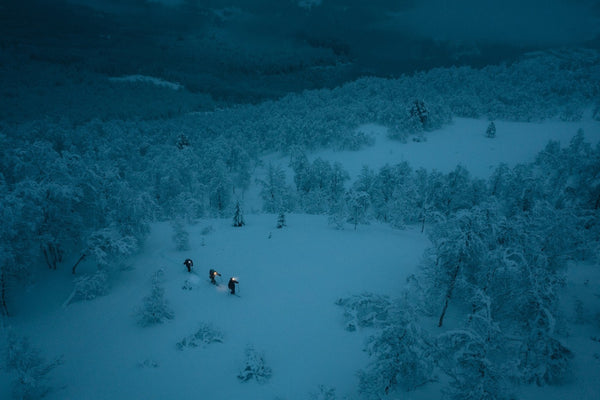
After a two-hour climb, with your climbing skins removed, all that’s left is your breath. You stop and look back. No one’s there. We design these skis to be light enough to carry you this far, yet sturdy enough for the descent. This is the land that begins where the lifts end.
4 articles
Filters
Filters applied: 0
€0–€899
155
158
162
166
168
169
173
175
176
178
180
181
183
185
188
touring
Player
Load
Prix
Size
Program
Sensation


Light, so far away.
Lightweight enough to take anywhere.
Every gram is weighed, debated, added, or removed. In the Shape series, we break down these decisions. How does a ski from Touring stay light enough for a full day on the slopes and still perform well on the descent? What we remove, and what we preserve.
Made for the great outdoors.
Touring ’s skis are your key to the entire mountain—the part that begins far from the lifts. Far from the crowds, the noise fades away, the air grows thin, and the landscape opens up until all that’s left is you and the sky. We craft these skis to devour distance while still holding a solid edge on a virgin slope. Weight matters, but only because lighter means farther, higher, and deeper into terrain that no one else skis. What you find here takes you where you want to go and brings you back to that profound silence that makes you want to set out again.
What is " Touring" skiing?
Climb up a mountain on skis using skins attached to the soles, then ski down freely once the skins are removed. No ski lifts: the skier provides the power. The Bindings feature a free-heel walking mode and a locked-heel downhill mode.
Climb up a mountain on skis using skins attached to the soles, then ski down freely once the skins are removed. No ski lifts: the skier provides the power. The Bindings feature a free-heel walking mode and a locked-heel downhill mode.
Do you need to be an advanced skier to start Touring ing?
No. If you can ski a red run comfortably, you have the technical skills. The challenge lies elsewhere: physical fitness—since the ascent requires sustained cardiovascular effort—and knowledge of the mountain environment: reading the terrain, weather, and safety.
Which UBAC should you choose?
UBAC 89 for going the distance: the lightest, most responsive, and most precise in turns. UBAC 95 so you don’t have to choose between ascents and descents: the most versatile model in the line. UBAC 102 when the descent takes priority: low camber, pronounced double rocker, freerando-oriented. UBAC 110 for powder days: the same DNA as the 102, pushed to the limit in width.
What is the width of the base on a " Touring " ski?
Under 90 mm: a ski designed for ascents and classic Touring ; lightweight and effective on hard snow and during traverses. Between 90 and 100 mm: a versatile option, narrow enough to follow existing tracks without extra effort. Over 100 mm: freerando; this ski is geared toward descents and requires more effort on the ascent.
What weight should you aim for in a ski for the " Touring " event?
In the all- Touring , a ski typically weighs between 1,100 and 1,500 g per ski: this is the range of the UBAC line. Below that are the ultralight models, another line focused almost exclusively on climbing performance. Above 1,500 g, we enter the realm of freerando models, which are more stable on the descent but more demanding on the climb.
What size Touring skis should you choose?
For classic Touring ing (UBAC 89 and 95), choose your usual size or 5 cm smaller. For freerando (UBAC 102 and 110), choose your usual size or 5 cm larger for more lift and stability at higher speeds. Feel free to check out our size guide on each product page.
What is the " Binding " for a ZAG " Touring " ski?
An insert- Binding , the current standard in the Touring. ZAG offers the FORGE[Tour] (DIN 4-10, 91, 97, and 102 mm brakes) for efficient Touring , and the FORGE[Pro] (DIN 3-11, 91, 97, 102, and 108 mm brakes) for demanding freerando. Both models were developed in collaboration with ATK in Italy.
Do the skis come with skins?
Skins are not included with UBAC skis, but you can add them to your package at the time of purchase or buy them separately here