How to choose your ski and Bindings set Bindings downhill skiing?
ZAG Tips
How to choose a pair of skis
Choosing a pair of skis is quite an experience. Whether you’re looking for a specific model or exploring as many options as possible, you first need to understand the criteria that will help you make a decision and choose the right pair. It’s not always easy to figure it all out, especially when you don’t know exactly where to look. The key is to ask yourself the right questions to find the right answers… So here are a few questions:
- Are you looking forall-mountain skis,freeride skis, or both?
- Are you a beginner, intermediate, or advanced learner?
- Are you looking for versatile skis or high-performance gear?
- Are you more into tight turns at full speed or wide turns at Mach 12?
This isn't a personality test; there's just a wide variety of options, and the goal is to make the right choice.
1
For those who enjoy a relaxed skiing experience and beginners
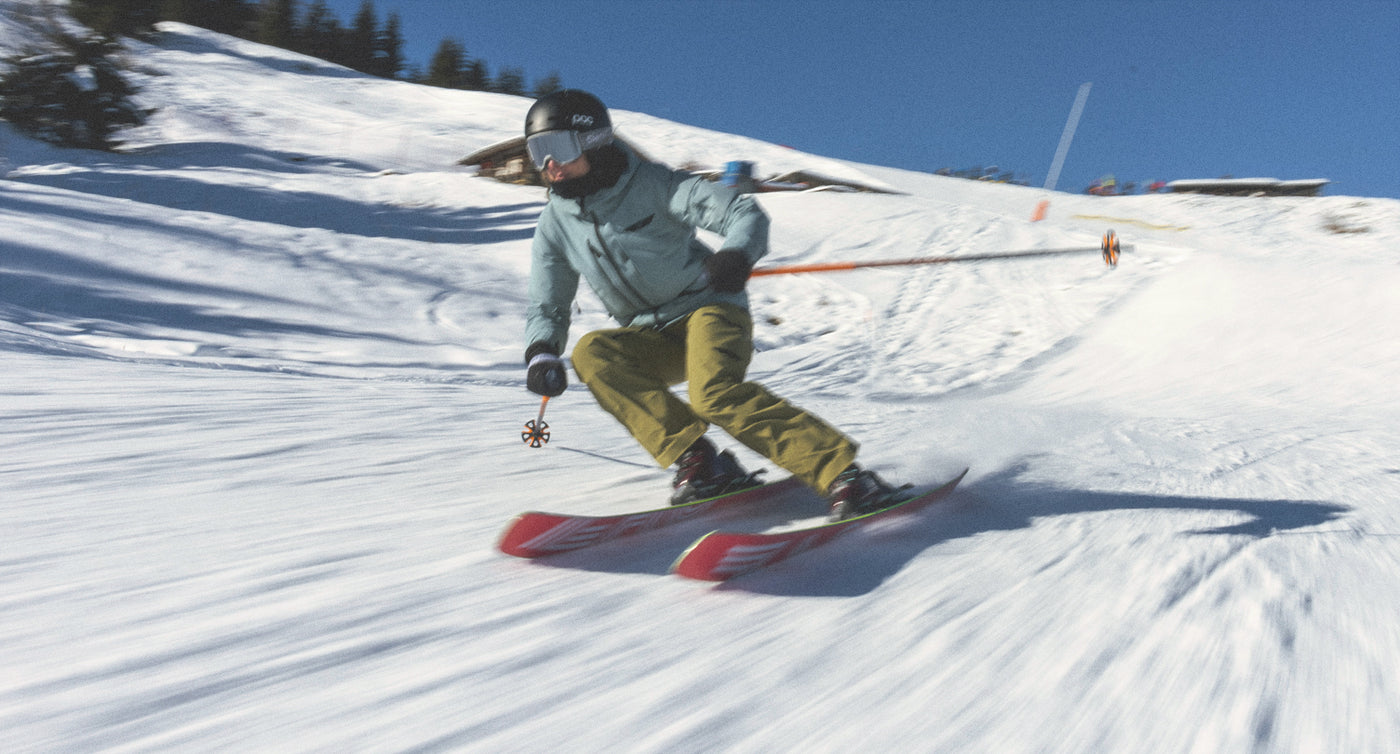
You’re a beginner—not to mention a total novice—and you want to look like you know what you’re doing when you’re snowplowing. Freeriding isn’t for you, and that’s just fine because if you stray too far from the trails, how are you supposed to enjoy a nice, relaxing glass of mulled wine at the mountain restaurant afterward? In short, your priority isn’t the big ride, but having fun on the trails with skis that are easy and fun to ski. Choose a model with a waist that’s not too wide—say, between 80 and 90 mm—an alpine shape with a flat tail that’s narrower than the tip, and good torsional stiffness. What you need is a ski that’s comfortable in a variety of conditions and has enough punch to fully experience the gliding sensation of carving small turns on groomed runs. For this, opt for skis with a short radius (around 17m) that offer excellent grip on hard snow, allowing you to navigate marked trails safely—and even venture into light off-piste terrain if conditions permit. To give you a concrete idea of what this might look like, check out the Harfang 86 and the Harfang 86 Lady for women.
2
For ski enthusiasts and seasoned riders
Are you a key member of a crew of powder-hungry freeriders who never leave home without your avalanche transceiver, shovel, and probe, and have you wrecked your last pair of skis on the landing of a rock wall? It’s simple: do some relaxation exercises to make up for the adrenaline rush you miss when you’re not on your skis, and of course, go buy yourself a new pair with a waist width of at least 110mm. What you need is a ski that will let you tear down freeride slopes at high speed, no matter the conditions—a ski that’s unsinkable in powder and ultra-stable in deep snow, while remaining responsive and maneuverable in forest sections. Even if you don’t necessarily plan to mount Touring Bindings Touring your skis, consider the possibilities a Binding offers—just to go a little higher, a little farther, and see if the snow is really fresher over at the neighbor’s. And in that case, choosing a lightweight freeride ski is actually a pretty good idea. Go check out skis like the SLAP 112 —they’re sure to be a perfect fit.
Well, we’ve talked about two typical types of skiers you’ll find at the resort, and there are countless others. What we do know is that there’s a ski for every skier. So if you don’t see yourself in the descriptions above, that’s perfectly normal. To choose the right skis, you need to know yourself well. If you’re just starting out, choose a progressive ski that will make you feel safe. Whether on the piste or freeriding, you’ll find intuitive, easy-to-use skis to support your progress and deliver exceptional gliding sensations. To push your limits, don’t hesitate to choose a ski that’s longer than you—it’ll let you go faster, carve wider turns, and feel more engaged. And to try a little bit of everything, a relatively wide ski (between 90 and 100mm at the waist) with an alpine core will be ideal, whether for carving turns on groomed snow or for the wildest freeride runs of the year. When it comes to ski length, it’s recommended to choose skis roughly your height, but don’t overlook the benefits of a longer or shorter pair. A shorter ski is often easier to handle than a longer one, which will let you go faster—choose based on your goals. We’ve put together a quick size guideto help you make your choice.
3
How do you choose Bindings ?
Once we’ve picked out our skis, we’re happy—yeahhh, that’s gooood… Now the Bindings. Ah! That’s no small matter. We briefly mentioned Bindings —not to be confused with Bindings . We’ll explain the difference between the two right away.
Bindings are the ones we’re all familiar with, featuring a toe piece and a fixed heel piece—meaning they’re screwed onto your skis and won’t budge. They’re adjustable in length to fit your boot size and are equipped with a safety system certified to DIN, TÜV, ISO, or EN standards. The TÜV label (Technischer Überwachungs Verein, or Technical Inspection Association) is a mark of reliability and German quality, just like the DIN standard, which corresponds to the standards of the German Institute for Standardization (Deutsches Institut für Normung = DIN). These standards served as the basis for developing European standards (European Norm = EN) and international standards (International Organization for Standardization = ISO). These standards aim to harmonize product quality and safety according to technical rules. All manufacturers of alpine Bindings strictly adhere to ISO standards, which represent the highest level of safety certification. Generally, the system is adjusted based on the skier’s weight and skill level. You can refer to the following table to determine the ideal setting for your Bindings .
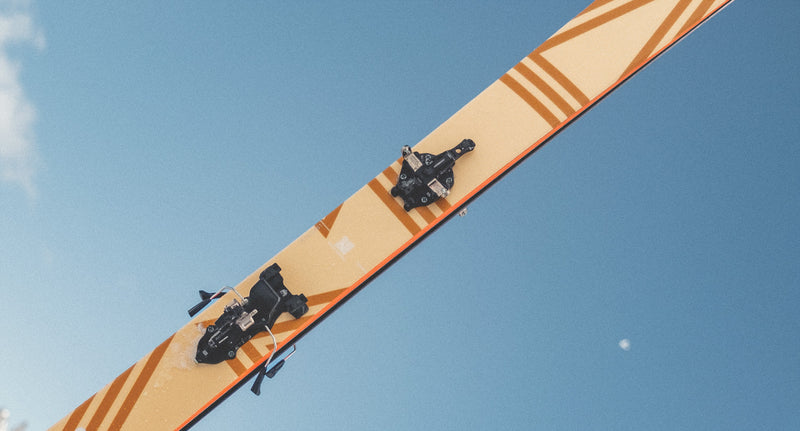
Bindings , on the other hand, allow you to ascend a few hundred meters usingclimbing skinsthanks to their toe and heel pieces that can be converted for Touring. While this system is certainly heavier than that of classic TouringBindings , it remains relatively lightweight and, most importantly, offers a level of safety nearly equivalent to that of Bindings . They combine the advantages of an Binding —with a robust mechanism certified to TÜV, DIN, or ISO standards—with the features of a Touring Binding Touring a walking position and reduced weight.
An appealing option for freerando enthusiasts—those who love off-piste skiing and aren’t afraid to strap on their skins to venture beyond the tops of the marked trails. It’s the perfect way to tackle that small valley or couloir you’ve been eyeing from the chairlift with confidence and safety.
For example, the Marker Duke orSalomon Shift Bindings , which look more like Bindings than Touring, are excellent choices.